Compression Matters: Why You Should Trust Physioactive With Your Legs and Lymphatic Health
June 02, 2026
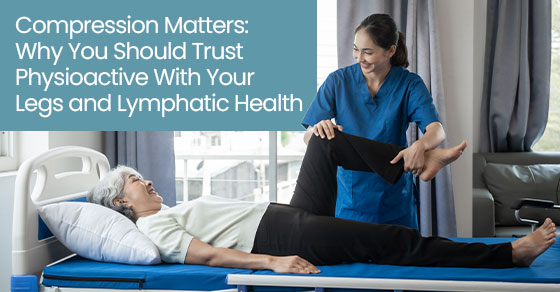
At PhysioActive, our wellness clinic isn’t just about injury recovery—we’re committed to whole-body health, and that includes the often-overlooked vascular and lymphatic systems. Whether you’re experiencing swelling, prominent veins, spider veins, or that heavy, sore feeling in your legs first thing in the morning, our physiotherapy team is trained to assess and treat the root of these symptoms, including venous insufficiency, poor lymphatic flow, and fluid retention.
Swelling and Edema: We Know the Cause—and the Cure
Swelling in the legs or arms is more than just a cosmetic issue. It can be a sign of inefficient venous return or lymphatic drainage, both of which can contribute to chronic inflammation, discomfort, and even fatigue. At PhysioActive, we look beyond the surface—we assess how your circulatory and lymphatic systems are functioning and address any minor alterations before they become major concerns.
We don’t just “treat swelling”—we identify why it’s happening and what you need to keep it from coming back.
Compression Therapy—But Done Right
You’ve probably seen compression stockings online or at your local pharmacy. But here’s the truth: most of those generic socks are doing you no favours. They often lack proper fit, use the wrong material for your skin type or circulation needs, and apply the same level of compression throughout, which is far less effective.
At PhysioActive, we take your vascular health seriously and work with premium medical-grade compression solutions like Bauerfeind’s VenoTrain® stockings, which provide:
- Graduated compression (tighter at the ankle, gradually looser up the leg) to optimize blood and lymph flow
- Custom sizing and professional fitting, including options like knee-high, thigh-high, or full pantyhose
- Durable materials that hold up over time, unlike cheaper versions that lose elasticity and effectiveness
- Options for both legs and arms, including upper extremity edema solutions
We help you choose the right compression class, material, and fit—because a properly fitted stocking isn’t just more effective, it’s more comfortable and wearable.
Who Should Use Compression Stockings?
You’re never too young to benefit from medical-grade compression. In fact, starting early can help prevent long-term vein damage.
Compression stockings are especially helpful for:
- Flight attendants and frequent travelers
- Nurses, teachers, hairdressers, and others who stand for long periods
- Office workers who sit for hours at a desk
- Athletes recovering from injury or surgery
- Those with a family history of varicose veins, lymphedema, or vascular disease
Look out for these warning signs:
- Bulging or prominent veins
- Spider veins
- Morning stiffness or soreness
- Swelling, particularly around the ankles or behind the knees
- A feeling of heaviness in the legs by the end of the day
If these symptoms sound familiar, it’s time to get a vascular and lymphatic health assessment at PhysioActive.
Covered by Insurance—And Worth Every Step
Most insurance plans offer coverage for medical compression stockings, often 1–2 pairs per year. With our expert fitters and premium products, you’ll make the most of that benefit—often at no cost to you.
And while our stockings may cost a bit more than what you’d find online, they’re worth every penny:
- Longer-lasting
- Clinically proven
- More comfortable
- More effective
Why PhysioActive?
What sets us apart isn’t just access to the best products. It’s our expertise. Our therapists are trained to assess:
- Lymphatic and vascular system function
- Joint and muscular contributions to swelling
- Post-surgical and trauma-related edema
- Postural and movement-based causes of fluid retention
And when we fit you for compression, we measure with precision and customize your solution—not just guess your size from a box.
Ready to Take a Step Toward Better Vascular Health?
If your legs are tired, swollen, or sore—or you simply want to protect your future circulation—don’t waste money on a one-size-fits-nobody solution.
Book your fitting at PhysioActive today. Our team will help you find the right stocking, the right fit, and the right plan to move better, feel better, and live better.
Compression isn’t just about socks. It’s about health. Let us help you get it right.


